
Even if the network of city trains in Bangkok is quite large and still expanding, it won’t let you reach all the desired destinations. At this point, the Bangkok bus service becomes handy, as it's an important part of Bangkok's public transport system. Discover a detailed guide to the Bangkok bus with public bus service providers, main bus routes, a route map, fare rates, and ticket options for using the bus in Bangkok.
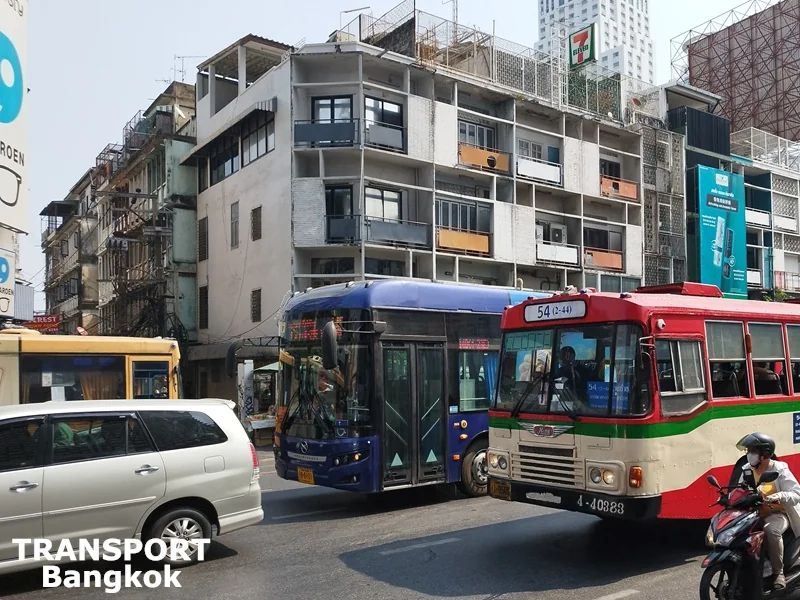
The Bangkok bus network can take you to any part of Bangkok and its suburbs. The size of the city and the huge number of Bangkok bus routes shouldn’t scare you off of using public buses in Bangkok.
More distant areas or smaller streets not covered by public buses can usually be reached by songthaews or motorbike taxis. You can always be sure that you will find a way to reach your desired destination.
Here you will find all the most important information on how to take the bus in Bangkok.
Bangkok Bus Service Providers
Public bus services in Bangkok are operated by the governmental Bangkok Mass Transit Authority (BMTA) and private operator Thai Smile Group (also called Thai Smile Bus), which was established in 2020 and jointly invested with 8 original private bus companies with licenses to operate public transport routes.
If you prefer a more tourist-friendly way of exploring main Bangkok attractions by bus, you can choose one of the Bangkok hop-on hop-off bus services. Simply book online a Bangkok Hop-On Hop-Off Bus Ticket and see the most famous attractions in the city at your own pace for 24, 48, or 72 hours.
Bangkok Bus Route Map
As Bangkok city is huge and there are many public bus routes connecting different corners of the metropolis, you will not find a unified Bangkok bus map with all the routes laid out on one sheet of paper.
However, to find your way to travel from your location to the desired destination by public bus, you can use one of the applications with a Bangkok bus map or rely on the route map found at the bus stop (if you will be lucky enough to find one).
For detailed information about the most popular map apps and route maps at the bus stops, explore the Bangkok bus map.
Bus Stops in Bangkok
There are thousands of bus stops all around Bangkok. However, finding one sometimes can be a challenge, as it’s not uncommon for the bus stop signs to be covered by other objects or even removed. Look for a bus stop sign like this.
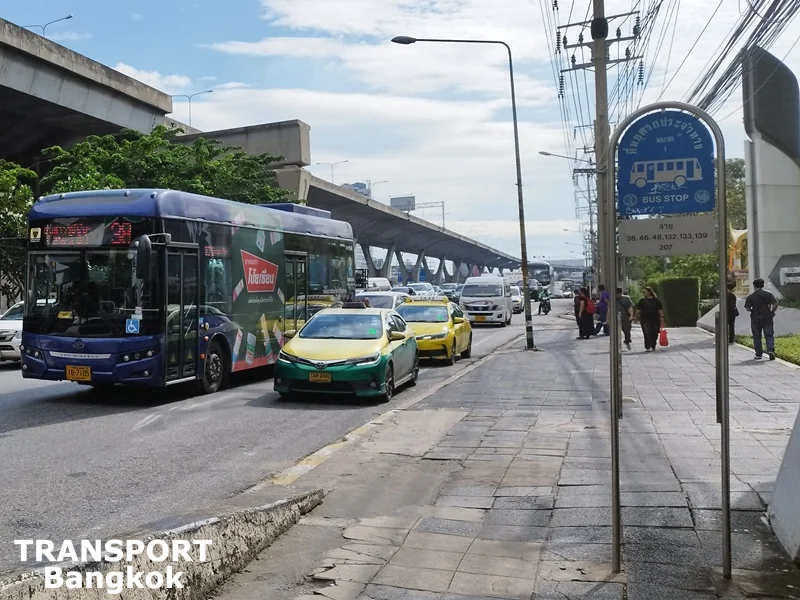
There are also shelters at some of the bus stops. These are much more difficult to miss.
Bangkok bus routes passing the bus stop are normally written on the bus stop sign, but it might not necessarily be up-to-date.
If you can’t find the list of bus routes at the bus stop, just stay there for a while and watch buses passing by – you will get an idea about your options at that particular bus stop soon. Otherwise, use an app such as ViaBus or Google Maps.
Bangkok Bus Types
There are two main types of Bangkok buses: air-conditioned buses and regular or fan buses. Many routes now are covered only by one bus type, but in some cases you have a choice of both bus types on the same route.
Air-conditioned Buses
There are actually 4 different types of air-conditioned buses:
- Air-Conditioned Bus (Cream-Blue)
- Air-Conditioned Bus (Euro 2, Yellow-Orange)
- Air-Conditioned Bus (NGV, Blue)
- Electric Air-Conditioned Bus (Dark Blue), operated by Thai Smile Group
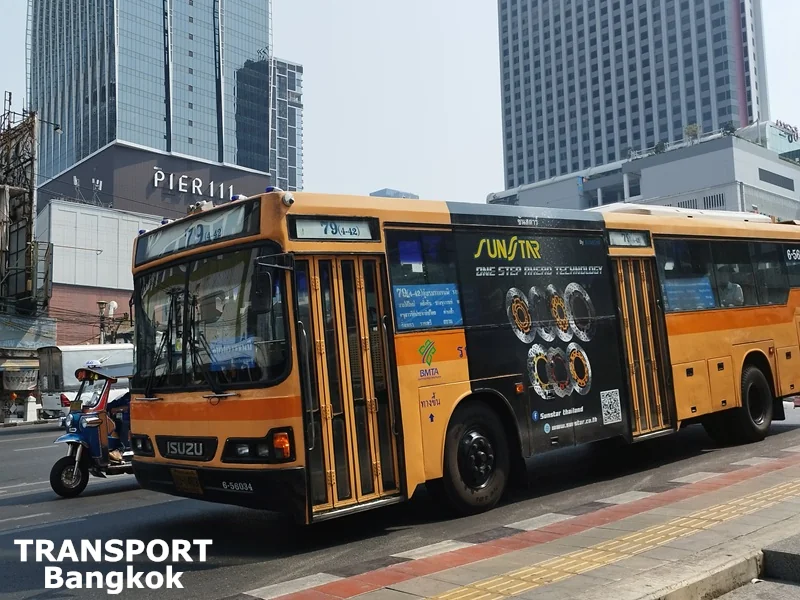
Most of the usual BMTA air-conditioned buses in Bangkok are blue, yellow, and orange.
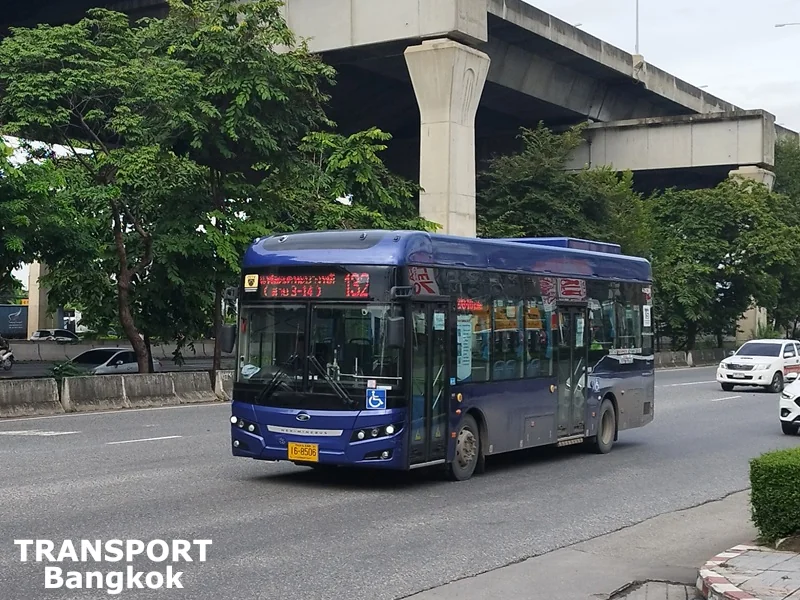
Electric buses of the Thai Smile Group can be recognized by the different type of dark blue buses that also normally have a Thai Smile Bus logo on the side. They are also often using the new Bangkok bus route numbering in the format Z-NN, where Z is the zone number (from 1 to 4) and NN is the new route number. However, the old bus route number without a zone is usually also displayed on the bus, as the route corresponds with the route previously operated by the governmental BMTA.
Regular or Fan Buses
Most of the regular fan buses in Bangkok are red/cream, as it's the color of buses operated by the BMTA.
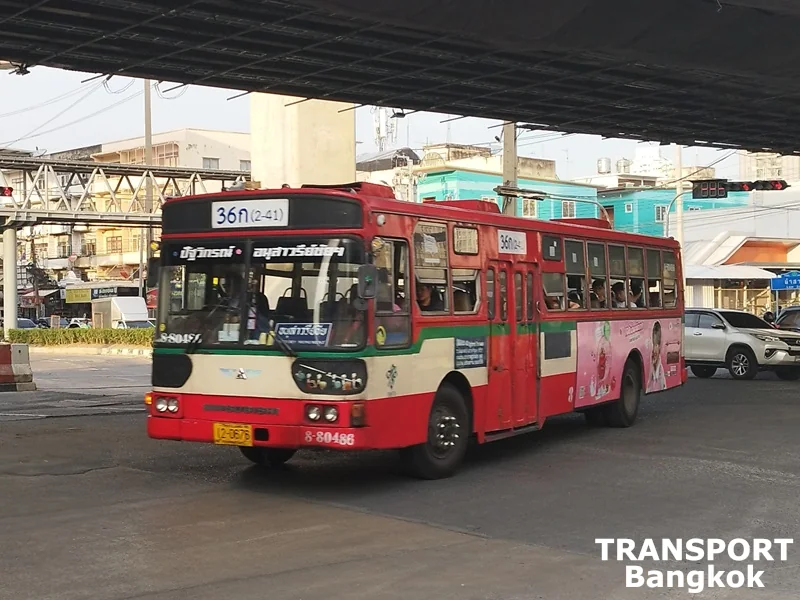
However, you might see buses painted in other colors, as these are the buses operated by smaller private companies that are much less common nowadays.
To know if the bus is air-conditioned or a regular fan bus, check the windows, as on the regular buses they are half open (unless it rains).
Bangkok Bus Fare & Tickets
Bangkok bus ticket fare depends on the bus route, type of bus, and time of your journey. Currently, the bus ticket price can be from as low as 8 THB to 60 THB, which is charged on one of the airport bus routes.
Bangkok bus tickets can be bought on board the bus. Just get on the bus, find a place to sit, and the conductor will approach you. All bus service providers accept cash payments, while some of them now also accept contactless card payments.
If you will be using the electric bus and boat service several times a day, get Thai Go Day Pass that covers all Thai Smile Bus routes as well as Thai Smile Boat routes.
Bangkok hop-on hop-off bus tickets can be conveniently booked online.
For more details about the bus ticket price and ticket options, explore the Bangkok bus fare & tickets.
Bangkok Bus Routes
There are a number of airport shuttle bus routes connecting Bangkok City with both airports - Suvarnabhumi Airport (BKK) and Don Mueang Airport (DMK). The bus routes S1, A1, A2, A3, and A4 are the most popular among the tourists, as they connect the airports with the city center.
Another popular route is the one of the Bangkok hop-on hop-off bus, which passes by Siam Paragon, MBK Center, Chinatown, Khao San Road, Wat Suthat, the Giant Swing, Wat Pho, the Grand Palace, Wat Arun, ICONSIAM, King Power MahaNakhon, and Patpong Night Market. The bus route is detailed below. To board this bus along the route, you need to get a Bangkok hop-on hop-off bus ticket.
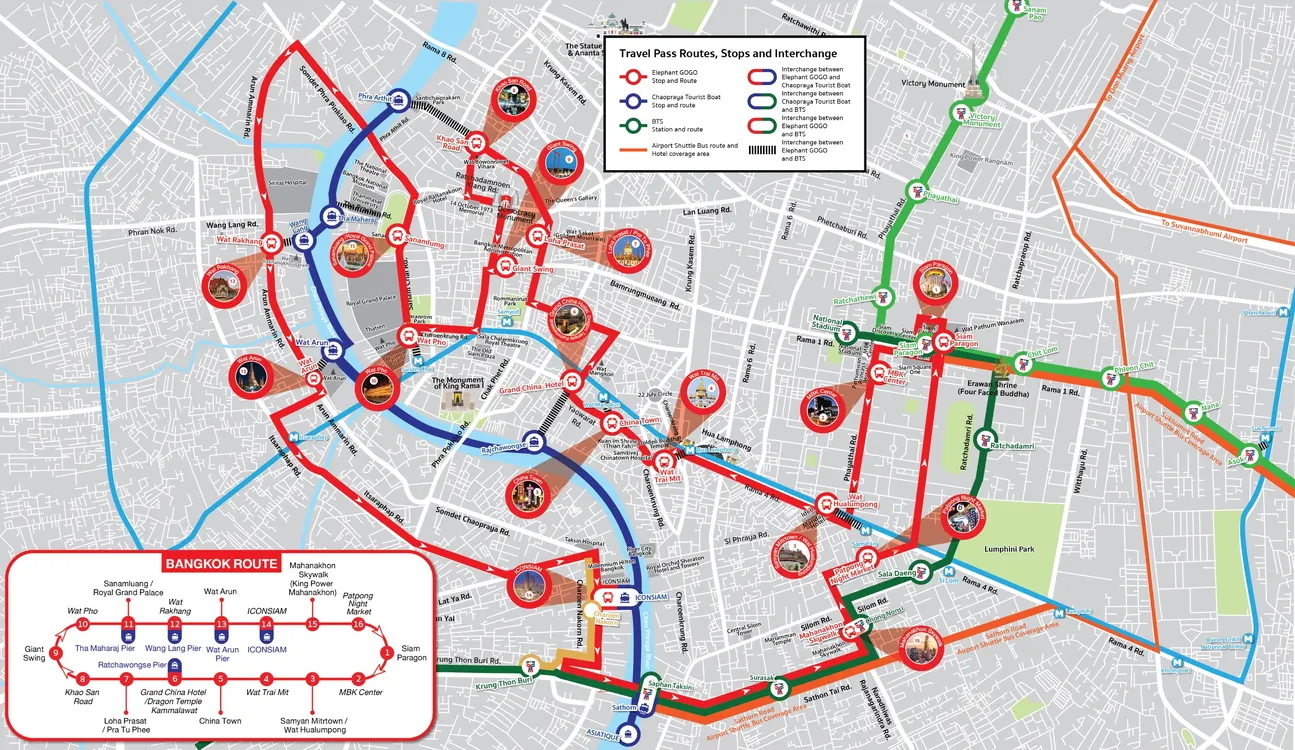
Other useful bus routes in the city are listed here: Bangkok bus routes.
How to Take a Bus in Bangkok?
As taking a bus in Thailand can be a bit of a different experience than in your country, below are the tips on how to take a bus in Bangkok.
Getting on a bus
If you are at the bus stop and want to get on some bus, just raise your hand, as normally buses here don’t stop if they see no people willing to get on the bus. If the traffic is busy or there’s not enough space at the bus stop, don’t be surprised to see the bus stopping in the second or even third lane of the road. Be careful boarding the bus.
If you are taking the electric Thai Smile Bus and using an HOP Card to pay the fare, don't forget to tap the card on the black machine near the entrance to the bus.
Inside a bus
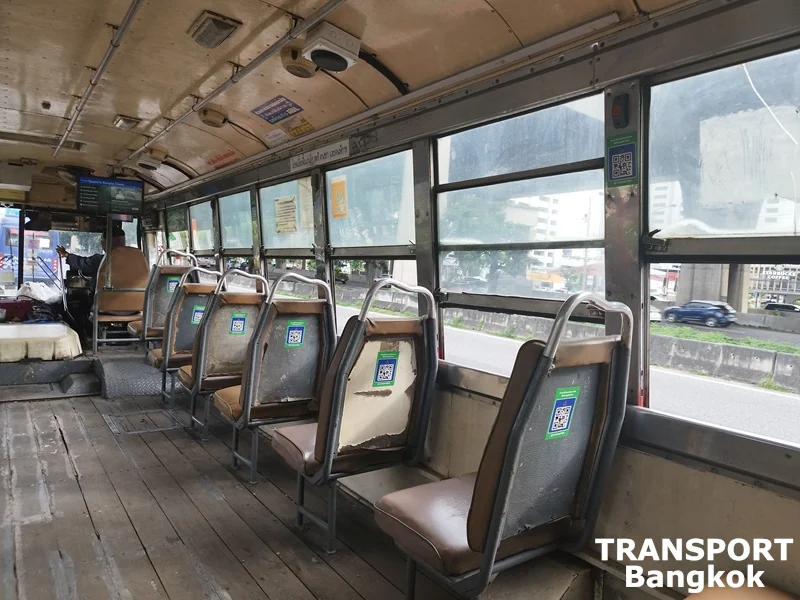
Normally all the windows in a fan bus are open, making a ride on it quite pleasant if only it’s not jammed with people. Taking a fan bus is really fun, as most probably you will be the only foreigner on that bus, and you’ll be able to see and hear the real life on the streets of Bangkok. You might hate or love them, but it’s the streets of Bangkok that make the capital of Thailand so special.
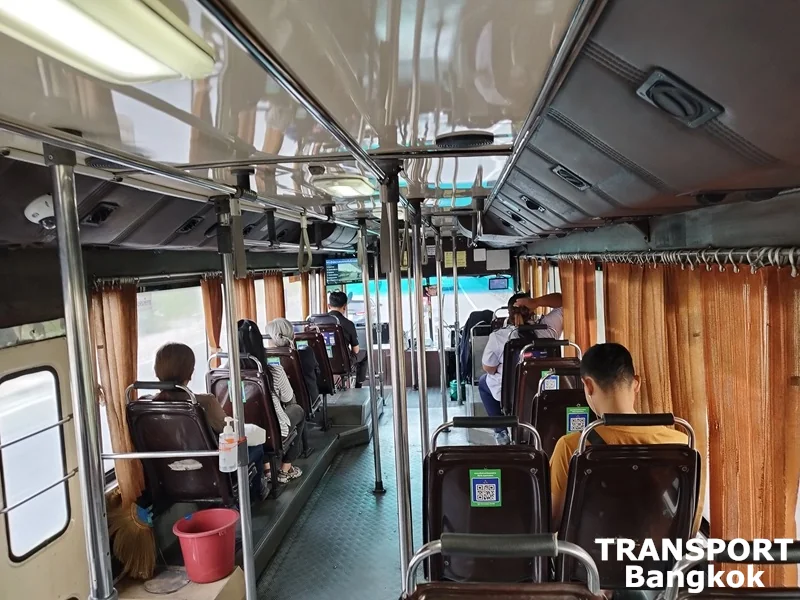
The environment on the air-conditioned buses is much cleaner and more comfortable. If sweating in the heat of Bangkok is not your thing, you should choose one of these buses.
Getting off a bus
When you want to get off the bus at the next stop, you need to press one of the red buzzer buttons that can usually be found on the walls or ceilings all around the bus. Be quick and careful when getting off the bus, as bus drivers here are always ready to move on as soon as the feet of the last passenger touch the ground.
If you are taking the electric Thai Smile Bus and using an HOP Card to pay the fare, you have to tap the card on the black machine once again when you reach the stop you want to get off at.
Bangkok Public Transport
Bangkok public transport consists not only of different types of public bus services but also of several metro systems (underground, elevated, and commuter trains), a local means of transportation called songthaew, and water transport with various public river and canal boat services.